10 chapters · Greek words, practical explanations and connected reading routes.
01 · FLOOR
A cheese board is a landscape in small
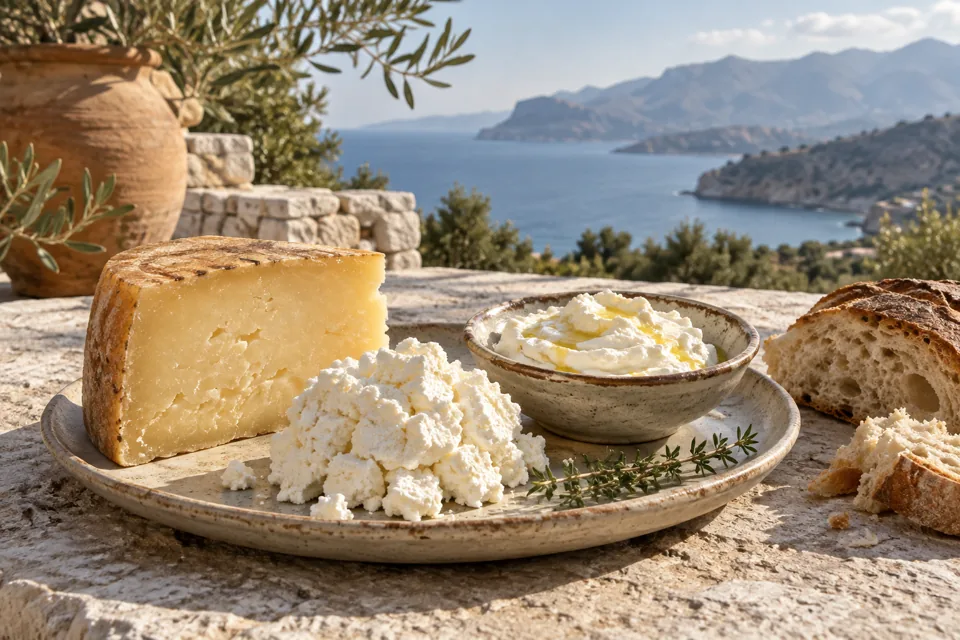
With three small pieces you can learn a lot: a firm ripened cheese, a soft fresh cheese and a pronounced sour cheese. Compare not only salt, but also texture, smell and how quickly the taste disappears.
The name gives a direction, while producer, milk and ripening determine the specific product. A cheese with the same general name can therefore have a completely different function in the kitchen. Ask what exactly you have in your hands when purchasing.
02 · FLOOR
Milk, curd and whey
In many cheese preparations, solid components of the milk are brought together into curd. The liquid that remains is called whey. This can also be a raw material again; in weikazes, protein is used, sometimes with extra milk.
For cooking, the distinction between moist and dry helps more than just the generic name. A fresh cheese can give moisture to a filling; a dry grating cheese mainly changes salt, taste and structure. Adjust your dish to the actual product.
03 · FLOOR
Graviera: cutting, tasting, combining
Graviera is a well-known firm cheese from the Cretan cheese world. Taste a little bit on its own before giving honey or herbs. Ageing can change the mouth sensation and intensity.
Use small slices of bread or salad, or grate a little above a hot dish. Leave the amount of extra salt in combination with salty olives. Not every cheese called graviera has the same protected origin automatically; read the full label.
04 · FLOOR
Myzithra: question which execution
Under the name myzithra you will find several products. A soft fresh version works differently than a dry, matured grating cheese. In addition, sweet cheese description does not necessarily mean that sugar has been added; it can indicate a contradiction with acid.
For a pie filling you want to know how moist and how salty the cheese is. If necessary, leak out a very wet product and taste the filling before adding extra salt. For a sweet filling, follow a recipe that indicates which version is meant.
05 · FLOOR
Xinomyzithra and anthhotyro
Xinomyzithra gives a clearer acid accent, for example towards a roof topping. Anthonyro can appear as fresh soft or dryer cheese. Let the seller explain how the product offered is eaten.
A replacement at home is a practical choice, not an identical cheese. Ricotta can, for example, approach a soft structure, but does not automatically deliver the same acidity or saltiness. Make the comparison visible in your recipe notes instead of pretending to stay the same.
06 · FLOOR
Xygalo and the east of the island
In East Crete you can meet xygalo: a soft, sour dairy preparation that fits well with bread or as an accent for vegetables. Read the exact product name and demand for milk and origin.
Use a small dish next to roasted vegetables for your own meal. First taste without extra lemon; acid is already a part of the character. This way you prevent the combination from getting sharp and the milder vegetable flavours disappear.
07 · FLOOR
Cheese in a warm pan
Not every cheese can loosen on a grill or hot plate. A moist soft cheese can fall apart, while a firm product demands another preparation. The name saganaki refers to a dish or preparation and is not the name of one universal grill cheese.
Use a suitable dish for feta or soft cheese when the recipe requires. Combine with tomato and a little oregano. Follow the instructions of the product and preparation; melting, tanning and heating are different questions.
08 · FLOOR
A test board for four
Take three different cheeses in small portions, simple bread, water and some tomato. Serve first without honey or sweet bedding. Taste from mild to pronounced and note three words with each cheese: structure, salt pressure and aftertaste.
Then add a small drop of honey or some oregano to a separate bite. You can discover whether a combination adds something. A test board does not have to be large; clearly the difference between the products is more interesting than many almost equal pieces.
09 · FLOOR
Buying and storing
Buy quantities that you can use within the stated storage period and follow the cooling instructions on the label. A package of moisture requires a different treatment than a dry cheese. Keep product information while you still have the cheese.
If you are allergic or dietary, you ask for milk, ingredients and rennet. A sheep or goat on a label does not replace that information. Use food safety advice for vulnerable eaters; a regional story does not tell how a product has been treated.
10 · FLOOR
Cheese words for the market
Τυρί Oh, my God. Oh, my God. Πρόβειο sheep's milk. Κατσικίσιο goat's milk. Φρέσκο fresh. Ξινό Oh, uh, uh, uh, uh, acid acid. Είναι φρέσκο ή ώριμοIs it fresh or matured?
Then choose an application: dabos, a pie filling, a tasting board or a warm vegetable dish. Thus, the cheese becomes a conscious choice instead of any extra ingredient. In a dish, five stories you can follow the step to a complete meal.