CONNECT · DISCOVER · MAKE IT YOURS
Venice in Crete · ports, power & daily life
An island-wide reading route through Chania, Rethymno, Heraklion and Sitia. Look at what buildings did, and the later layers you see today.
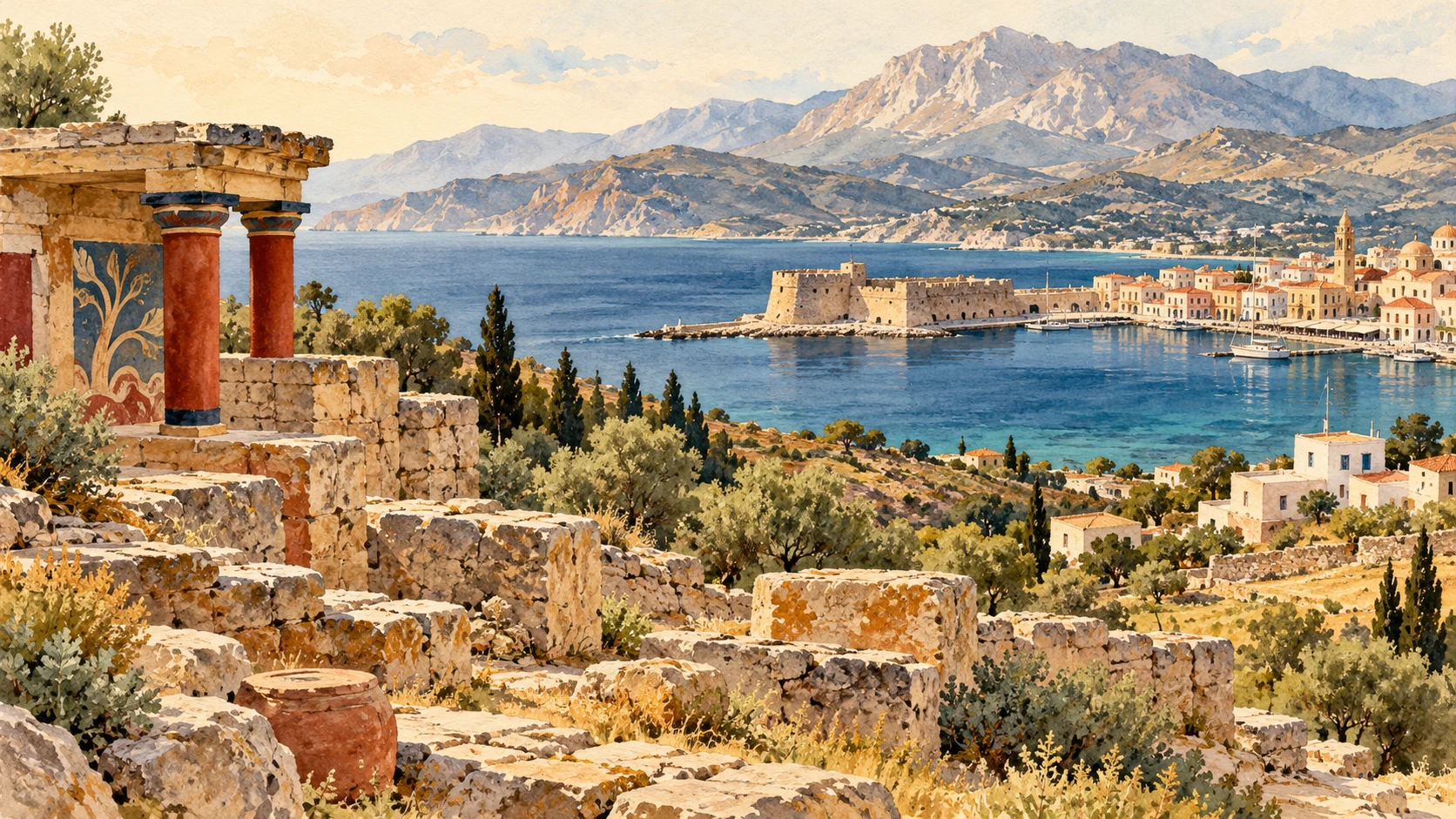
Reading a city through function and time
A port connects trade and protection, a wall shows where a government drew boundaries and a fountain connects technique to everyday life. Use those functions as an entrance. Not everything called Venetian on Crete has arisen or remained unchanged in one construction phase.
This route consists of four separate city lectures. It is not meant to be a car ride along four cities in one day. Choose the city at your stay and compare the photos and notes later.
Chania · a port with multiple lives
See the relationship between water, quay and building. Find places where works, move goods and defend play a role. Note the transition from the port to the narrow streets behind it.
The lighthouse has a Venetian origin, but was rebuilt in the nineteenth century under Egyptian rule. The present view tells more than one period. Use it as a practice: name what confirms an official monument story and what you suspect only from the form.
Continue in Chania →Rethymno · fortress, harbor and fountain
Fortezza, the old harbour and the Rimondi fountain offer three different perspectives on the same city. Look at a fortress for overview and limitation, at the port for connection and at a fountain for a meeting point. The municipal monument guide helps to distinguish the buildings from each other.
Do not automatically walk the entire fortified route. Choose a feasible part and spend time on a single detail, such as a passageway or gargoyle. The current street statue also contains Ottoman and later layers. Therefore, do not write every old building to the same ruler.
Municipal Monument Guide Rethymno →Heraklion · administration, defence and water supply
The municipal city routes connect the Venetian port, Loggia, fortifications and fountains. Choose a thematic walk: water, administration or defense. A limited question makes details more visible than a quick list of monuments.
At the Morosini fountain you can see how a visible city monument represents a larger technical system. The supply came from the area of Archanes. Read the water guide for the relationship between source, transport and distribution in the city.
Follow the water →Sitia · Kazarma as a historic anchor
The name Kazarma is connected to Casa di arma. The complex served a military and administrative function and underwent destruction, restoration and changes. The municipal explanation makes it clear that the building is not simply an intact remnant of one moment.
Look from the city at the location of the fortress and then compare the view from the complex when it is accessible. Which parts of city and bay stand out? Let opening and accessibility determine which part of this visit fits.
The existing guide on Sitia →What remains visible?
After a visit, put two photos of yourself next to each other: a large overview and a small usage detail. What story does each photo tell? A monument can express power and be part of the ordinary life of residents at the same time.
Connect your perception to the timeline. Do not confuse a construction period with an unchanging identity: materials are reused, buildings are given new functions and memories shift.
Crete through the centuries →Sources & edition
Editorial edition · 21 October 2026. Commands, menu guides and selection aids are their own effects. For practical data, please refer to the mentioned administrators; check current access and facilities before your visit.